
When Media Clips the Context: How Clickbait Replaces Journalism
How context gets erased to manufacture outrage

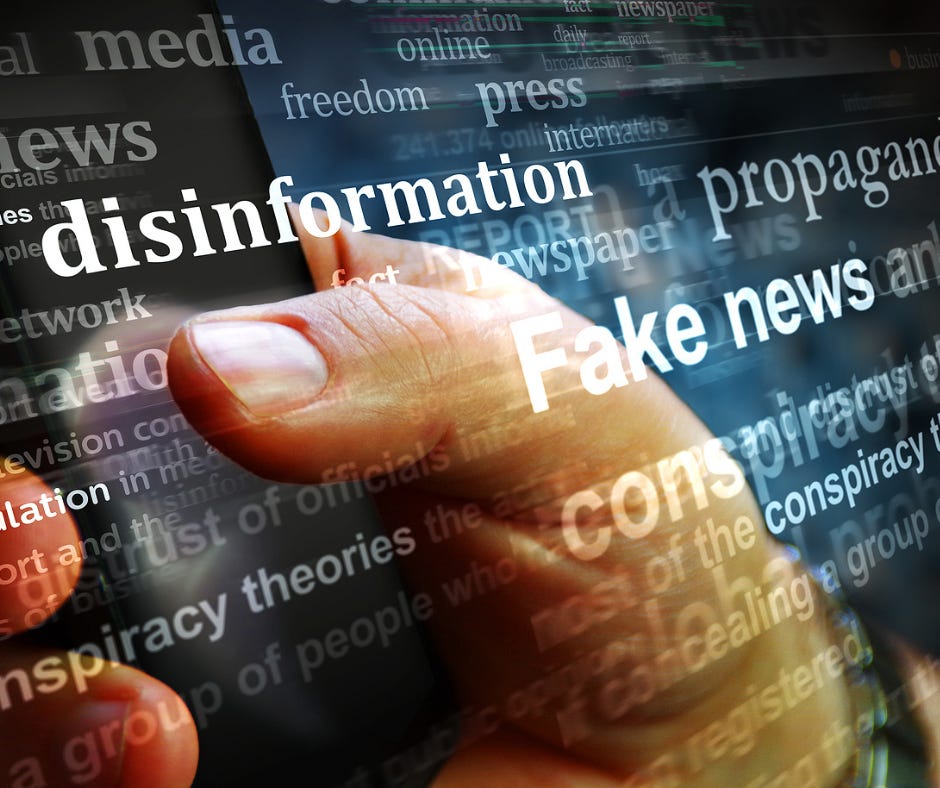
🔥 They clipped the shock line and buried the truth.
🧩 Context didn’t disappear — it was removed on purpose.
📢 Here’s how outrage gets manufactured when journalism twists facts.
📰🍵 Grab a cup, settle in—this is the story behind the headlines…
There’s a clear trend in modern media, and it’s hard to miss. Headlines are being used like weapons, with some outlets clipping the most shocking line, cutting out the context, and pushing stories meant to provoke feelings rather than inform. A recent example is a viral post claiming Trump “called mail-in voting cheating” while “using a mail-in ballot himself,” conveniently skipping the part where he explained the exceptions he supports.
Here’s the full truth: Trump and his spokespersons have repeatedly said he “supports exceptions for mail‑in voting” — illness, disability, military, and travel. He has only “opposed universal mail‑in systems”, where ballots are automatically mailed to every voter without a request. That distinction matters, and they know it. But the clip going around? They cut all that off.
Here’s the part the media left out and didn’t even bother to mention: Trump used an absentee ballot because he wasn’t in Florida at the time. He was out of state on presidential duties, including a public‑safety roundtable at the Tennessee Air National Guard Base in Memphis. When you’re not physically in your county on Election Day, Florida law requires you to vote early or vote by mail. That’s exactly what he did — the same process every Florida voter follows. His official residence is in Palm Beach, Florida, which is listed on his voter registration. However, during his presidency, he mainly lives and works in Washington, D.C., so he is often away from Florida during state elections.
So yes — he used a mail‑in absentee ballot because it falls under the exception, he has openly and consistently supported.
The media wasn’t interested in nuance; they wanted the shock value. So, what did they do? They clipped the most sensational line, slapped on a headline, and pushed it out as if it told the whole story. That’s not journalism — It’s clickbait meant to tarnish the Oval Office and spark public outrage against the current American president, instead of reporting and promoting honest, truthful facts that could encourage genuine bipartisan dialogue.
This isn’t new — it’s a pattern media‑analysis and watchdog groups such as the Media Research Center, FAIR, Media Matters, the Center for Media Literacy, the Poynter Institute, PolitiFact, the Columbia Journalism Review, and academic institutions in Sweden and the U.S. have all documented recurring patterns of selective editing, missing context, and narrative‑driven reporting across major media outlets.
One of the most talked‑about moments is the Charlottesville remarks. Back in 2017, big outlets like CNN, NBC News, CBS News, and The New York Times ran headlines focused on one phrase from the press conference. What many missed was the full transcript, which contained clarifying lines left out of the early coverage. Media‑analysis groups, including Poynter and the Columbia Journalism Review, later looked at how selective editing influenced public perception. It’s still often used as an example of how a short clip can dominate a national conversation.
Another highly talked-about moment was back in 2020 during the White House briefing on disinfectants. Within minutes, the “inject bleach” meme exploded across social media, boosted by outlets like MSNBC, CNN, and various online news platforms. However, the viral clip was just a small excerpt from a longer exchange with DHS officials. When the full footage was later reviewed, the tone and flow came across differently than in the snippet. It became a prime example of how short clips can overshadow full context, especially when social media speeds up their spread.
The Lafayette Square incident shows how early reporting can shape a narrative before all the facts are in. Initial coverage from outlets like The Washington Post, The New York Times, and CNN portrayed the park’s clearing in a particular light. Months later, a report from the Department of the Interior’s Inspector General offered more context on timing, planning, and operational choices. While the new details didn’t undo the initial headlines — nothing really does — they did underscore how fast a storyline can solidify before the full story emerges.
A similar pattern showed up in the coverage of the alleged Russian bounties. Back in 2020, outlets like The New York Times, The Washington Post, and The Wall Street Journal ran stories based on intelligence claims that were later revisited. When the intelligence community updated its assessment in 2021, several outlets followed up or issued clarifications. Media watchdogs flagged it as a case of rushed reporting, where the initial story spread much further than the later corrections.
Here are three of the most common tactics used to twist public perception:
🔹Selective Editing of Quotes-This is the oldest trick in the book. A public figure gives a full statement. The clarifying sentence comes right after the explosive one. But the clip? Only the explosive line makes it into the headline. The next sentence — the one that changes the meaning — gets cut. This is how a 10‑second clip becomes a 24‑hour outrage cycle.
🔹Headlines That Don’t Match the Article- Another common tactic is when the headline is written to provoke emotion, not accuracy. You click the article, and suddenly the tone changes. The nuance appears. The exceptions show up. The context returns. But most people never click. They walk away believing the headline — not the facts. This is how clickbait replaces journalism.
🔹Viral Clips Missing the Full Video-A short clip goes viral. The full video is two minutes longer. And the missing portion completely changes the meaning. But the viral version becomes “the truth,” even when the full footage shows: a different tone, a different sequence, or a clarification that was cut out. This is how narratives get manufactured.
When context is stripped away, people aren’t informed — they’re misled. When headlines are blown out of proportion, trust fades. When clips are cut to spark outrage, the truth gets lost beneath a wave of emotion.
This article isn’t about defending or attacking anyone—it’s about spotting a trend in modern media: context gets cut, nuance fades, and outrage becomes the main product. Once you notice it, you start catching the missing lines, the cropped clips, and the dramatic headlines that don’t match the actual content. You realize how easily a half-truth can become the whole story just because it’s been packaged more effectively.
Here’s a simple checklist for readers who want to learn how to spot facts from the fuss……
🔍 1. Check the source — not the screenshot: If it’s a meme or cropped graphic, treat it as unverified until you see the original.
🧩 2. Look for the missing sentence: The clarifying line is usually right before or after the viral quote.
📰 3. Read past the headline: Headlines sell emotion. Articles contain facts.
🎥 4. Find the full video, not the clip: A 10‑second clip can flip the meaning of a 2‑minute statement.
🗂️ 5. Compare at least two reputable sources: If only one outlet is reporting it, slow down and verify.
🧭 6. Watch for emotional language: Words like “shocking,” “explosive,” or “chaos” are red flags.
🧠 7. Ask the simplest question: “Does this make sense?”: If it feels too perfectly outrageous, it’s usually framed, not factual.
If we want real conversations, online or offline—not clickbait drama—we need the whole picture, not half a headline or distorted, misreported stories. This goes beyond a single incident or moment. It’s about refusing to let anyone—media, influencers, or political operatives—manipulate us with chopped‑up clips and emotional traps.
Americans deserve more than recycled outrage and manufactured confusion. We deserve honesty, accuracy, and the whole truth every time. The only way to get there is by staying informed, factchecking, and holding every outlet that claims to “inform” us accountable.
When people skip self-education by not verifying sources, only reading headlines, and ignoring full footage, they become easy to mislead. But a public that takes its time, double-checks facts, and insists on transparency? That’s a public no one — not the media, influencers, or political operatives — can control.
🎯When we stop letting headlines think for us, the noise fades, the truth shines through, and the power goes back to the people—exactly where it should be!
Just Sayin - Deb✍️
Thanks for reading: “Just Sayin with Debra Edwards“- 👈🏻if you want to follow along on Facebook! This post is an opinion & public — feel free to LIKE & SHARE! 🎯
❤️🤍💙 #dejustsayin